
The current Stentor in Every School classroom workshop curricula consists of three in-person classroom workshops that provide students with an opportunity to do hands-on science research right at their own desks. Students embark on a journey of first identifying an interesting and novel question, then conducting experiments to answer that question, and finally communicating their most interesting findings to their classmates. Through these workshops, students get to interact with scientists in training and develop their own confidence in pursuing science themselves. More than once, students have emphatically requested that we host our SiES workshops in their classrooms again during the following year.
Day 1. Students learn about research and Stentor coeruleus.
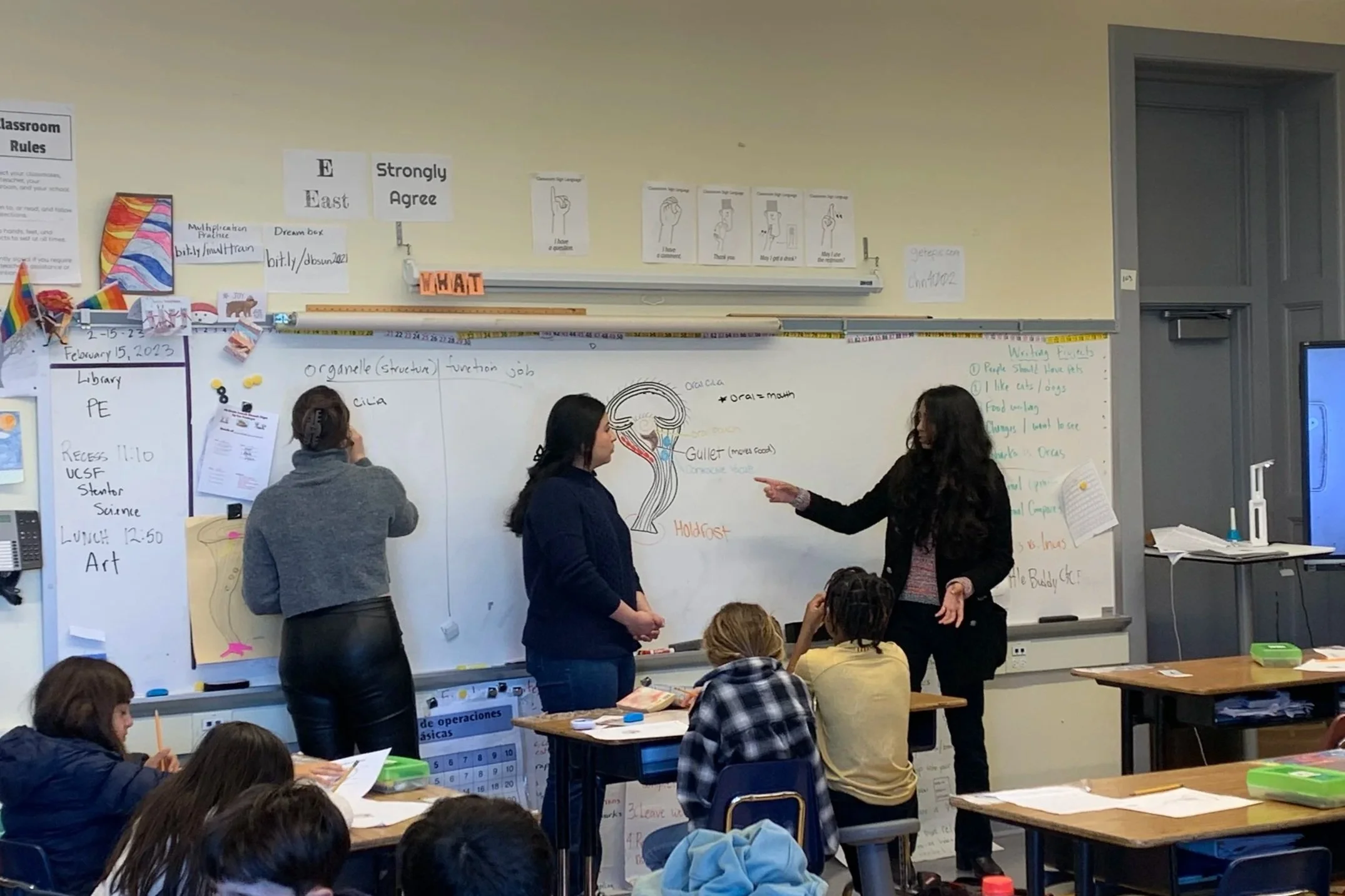
A team of volunteer scientists give an introduction lecture to a class of students, teaching them all about Stentor coeruleus. Volunteers draw a diagram of a Stentor on the white board to illustrate and describe the different parts of the organism.
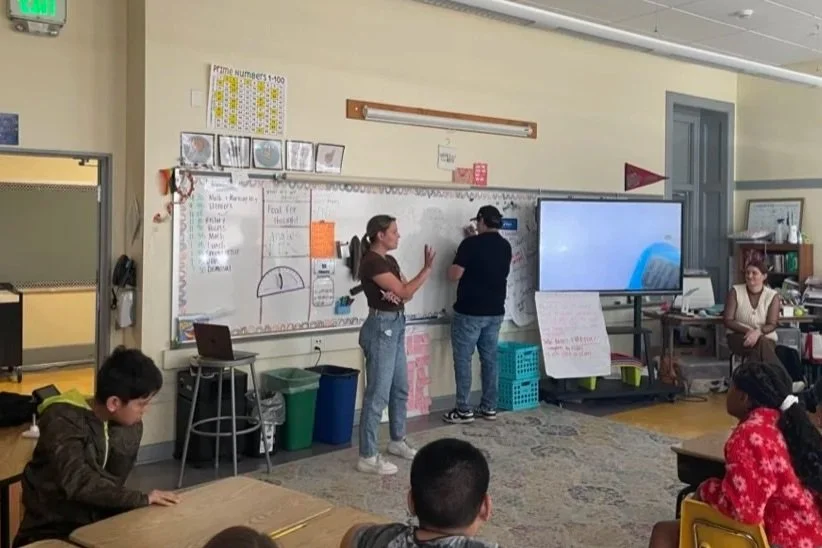
Following an introduction to Stentor, what is known about the organism so far, and what it is like to conduct research, volunteer scientists take ideas from a class of students on the different types of novel experiments that students want to explore.
Day 2. Students pursue novel questions through experiments.
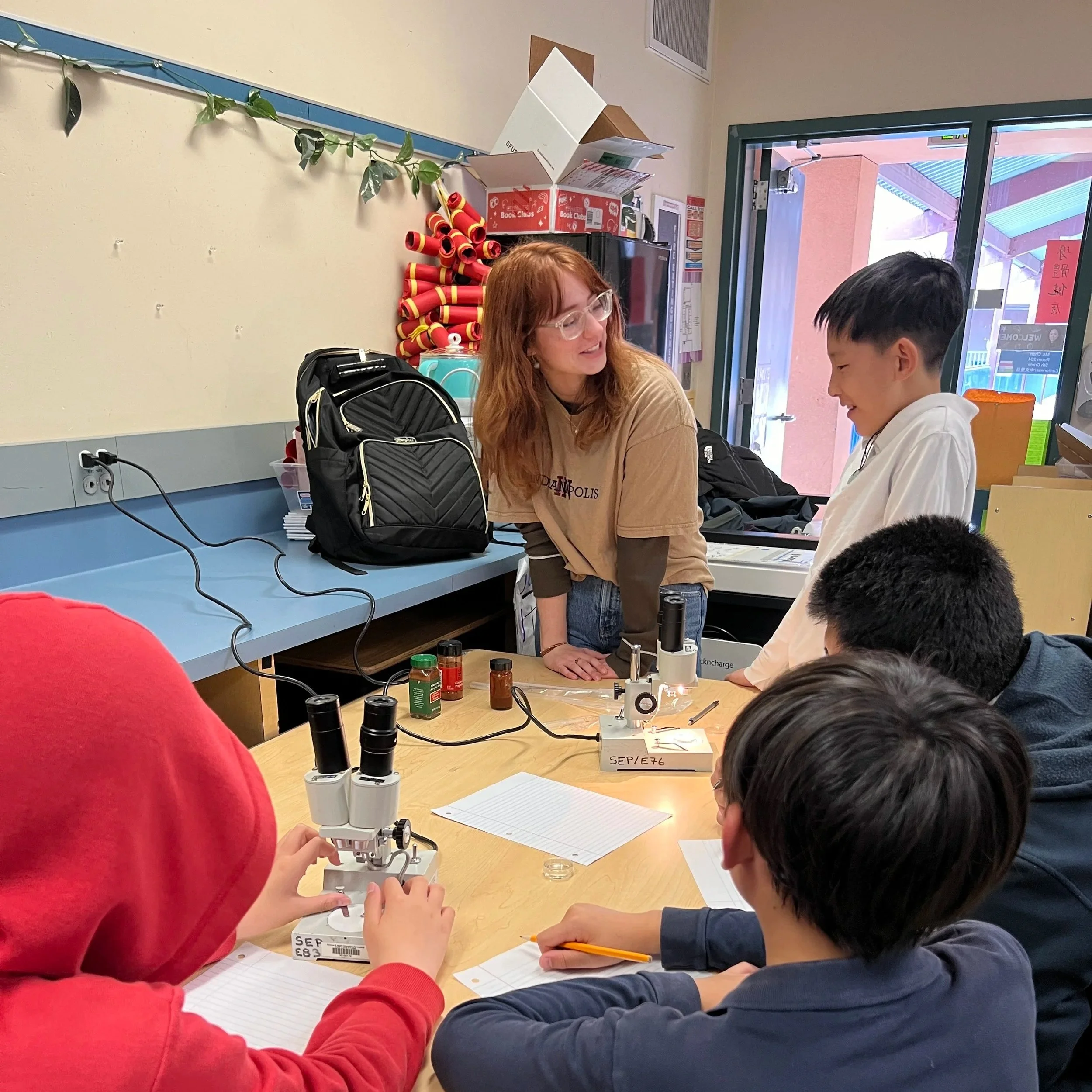
A volunteer scientist leads a group of five students to conduct experiments using Stentor coeruleus. Each group of students have access to their own microscope, a piece of scientific equipment that some students have never had a chance to interact with and see the world through until the SiES workshops. Volunteers guide students through how to use a microscope, how to carry out experiments, how to record observations, and how to interpret results.
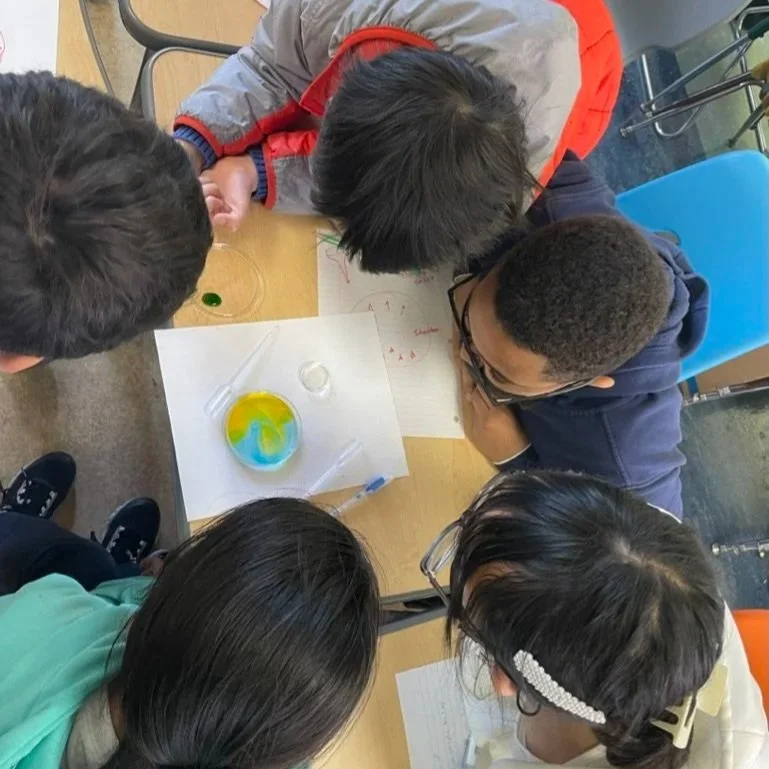
A group of students explore the topic of Stentor phototaxis (an organism’s response to light) and their hypothesis that Stentor may be able to sense and respond to different colors.
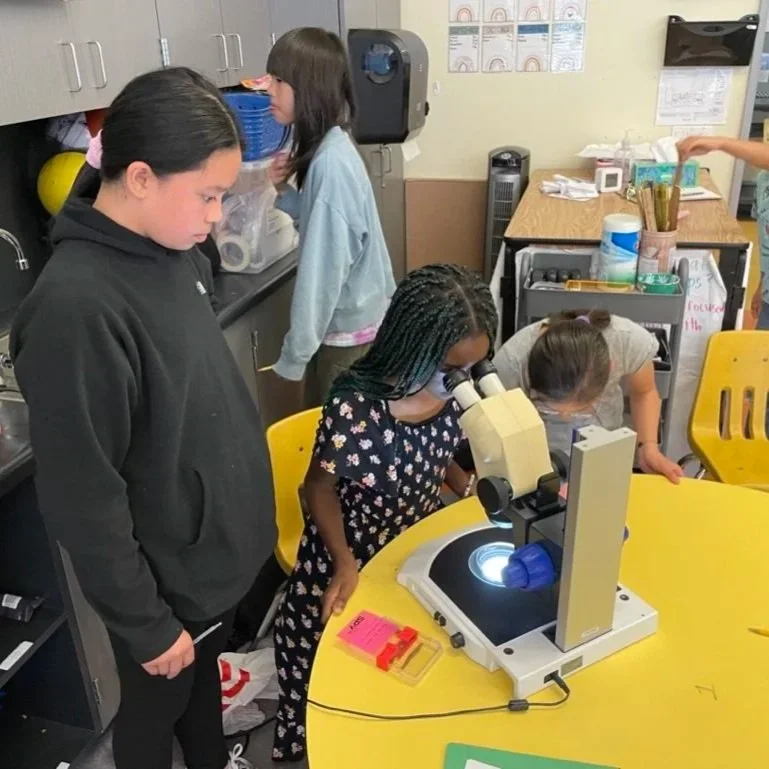
A student who previously participated in the SiES workshops, now in the fifth grade, volunteers as a guest instructor for a class of fourth graders currently participating in the SiES workshops. Our guest student instructor became an expert in cutting Stentor in a project to better understand Stentor regeneration, and is now passing on their knowledge by teaching a group of fourth grade students to cut Stentor as well.
Day 3. Students share their findings with their classmates.
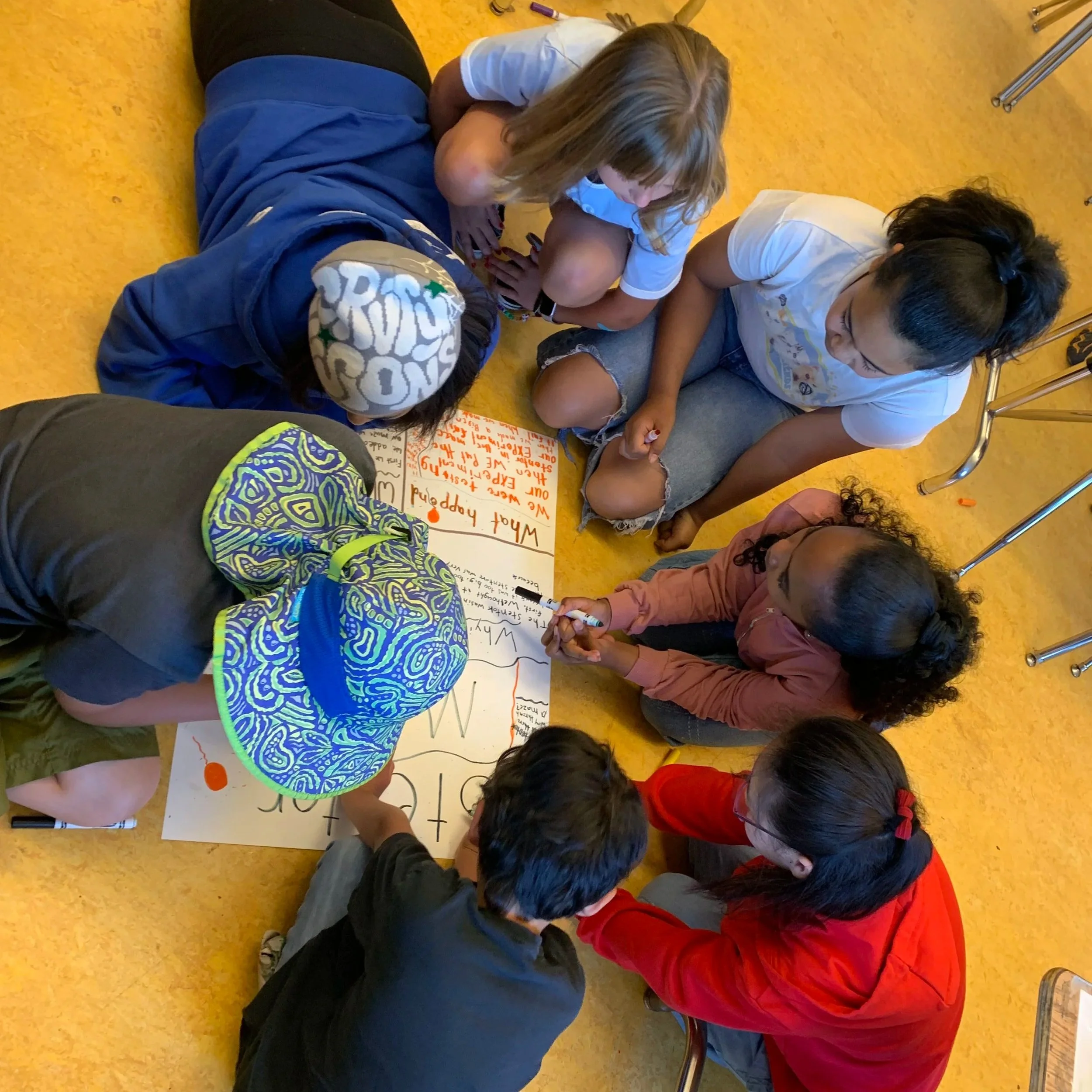
After they complete their experiments, each group of students work together to create a scientific poster that visualizes the novel question they pursued, describes the methods they followed, presents the observations they made, and explains the conclusions they drew. Students take turns writing on the poster and creating any illustrations they believe will be important in telling their story to their classmates. Students love this hands-on, collaborative activity almost as much as conducting the actual experiments.
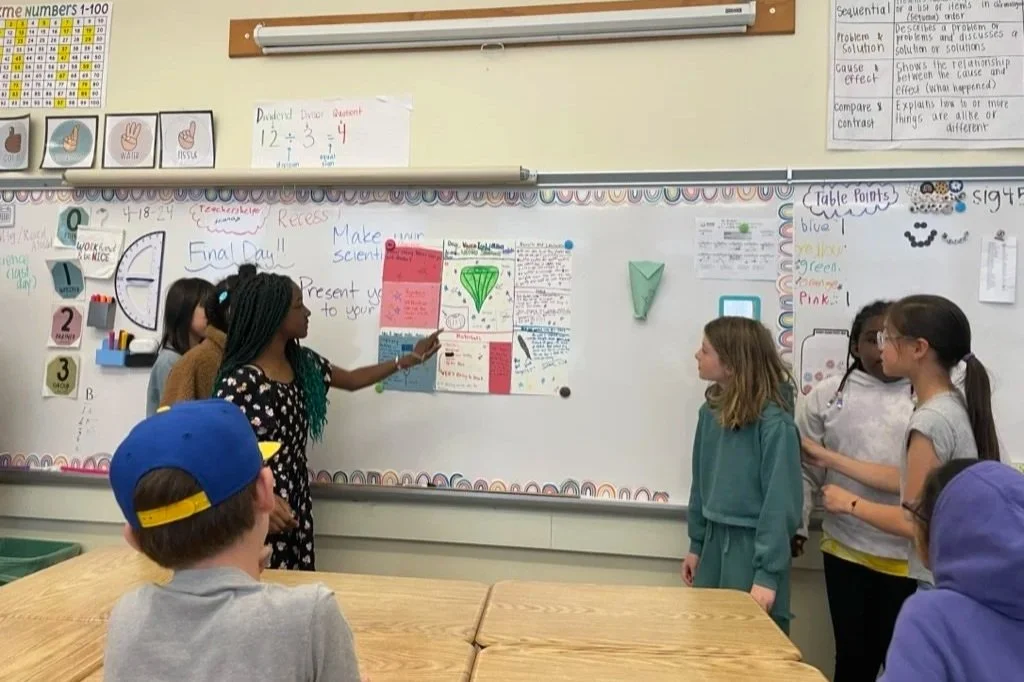
Each group of students take turns presenting their research question and their findings to their class. Students take turns presenting different sections of the poster, and each section represents a different part of the research process.
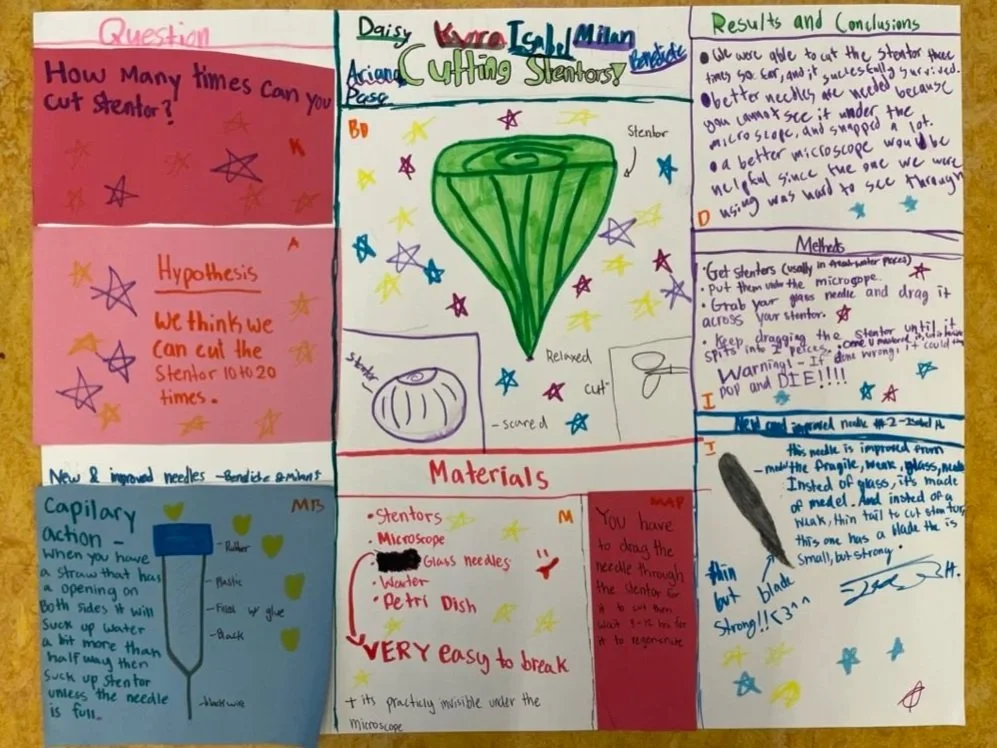
A poster made by a group of students describing their pursuit of the question “How many times can you cut Stentor?” All of the sections included in this poster are reminiscent of those that can typically be found in a college and professional scientific poster. Students are often very interested to hear about the question that their friends in another group had pursued as well as any data that might have been collected. This activity also highlights the intersection between science and art and enables students with different types of skillsets to recognize science requires diversity of strengths and perspectives.